
Listen. Unlearn. Reimagine. Build.
We follow the hum of history. For over a hundred years, sound has been cultivated in Struer—invented, refined, expanded, sent across the world. 89 joins this journey, tuning into the past, amplifying the present, composing the future.
We inherit another promise. These buildings were raised with the dream of a school—a place for learning, for gathering, for shaping knowledge. That promise stands, reimagined. A space where ideas take form, where practice leads thought, where knowledge is shared, shaped, and lived.

To learn is to unlearn. We break habits, question assumptions, and make space for new ways of thinking, making, and listening.
89 is a frequency of transformation. A space where listening is action, where making is a way of thinking, where people, places, and processes shape each other.
Struer is our instrument. Its wind, its water, its industrial whispers. A landscape of invention, where past and future fold into the now.
Here, we build together. Each sound, each idea, each connection leaves a trace. A shared space, carried forward by those who listen, those who create, those who gather. Step inside. Tune in. Be part of it.

89 is...
A school? A lab? A playground? 89 is an experimental sound art learning community born out of the unique ecology of Struer—City of Sound, Denmark.
89 offers a radical alternative to the establishment of universities and art schools. It’s a space of knowledge and making where learning is lived; new learning spaces, programs, structures tested and allowed to thrive, and sound becomes a way of thinking, doing and being.
89 values hands-on experience, collaboration, and artistic autonomy. We believe in learning by doing, failing, experimenting, questioning, and in cultivating a powerful agency among everyone involved to create the program relevant to you and the world.
For 89 days, you co-create your program alongside other artists, makers, artistic researchers, and thinkers. No ivory towers. No grades. Fluid hierarchies. Sound, art making, critical reflection, and action.
Whether you are looking for an alternative to traditional academia or a supplement to your existing education, 89 provides a space where you can expand your practice, develop new skills, and engage in meaningful creative work.
How we work
Radical Learning: We embrace co-creation, transdisciplinarity, and synesthesia while encouraging participants to direct their own learning. Learning is an active, shared, and evolving process that thrives through collaboration across fields and senses.
Everyone's In: You are more than just a participant. You are a participant, an organizer, a collaborator. Learning happens together, through shared experience and engagement, rooted in the local context of Struer and our global network beyond. If you're here, you're involved. 89 is an evolving, living organism, shaped by those who take part.
Sound as Thought: Sound is more than just material; it is a way of thinking, questioning, and engaging with the world. We explore its role in art history, culture, society, and technology while staying connected to a broader global perspective.
Do-It-Yourself and Do-It-Together: We build this place together, across disciplines, ideas, and explorations. Curiosity and openness drive us forward, ensuring that every experiment, every new idea, and every failure is part of a larger process of discovery.
Using What We Have: Social, artistic, and environmental sustainability is embedded in everything we do. Our processes, our collaborations, and our creations all contribute to a shared, ongoing learning experience. From furniture to tools to art materials to food to people to how we move around, we make the most of the resources at hand, considerately.
Roots
89 is an experimental sound art learning community; an alternative learning framework, an art school and expansive platform. It thrives as a participant-driven space, rooted in explorational transdisciplinarity and co-learning.
89 is made together. It grew out of a partnership between Sound Art Lab, who shapes the content, and the Education Initiative in Struer who run the administration. Local partners and collaborators from elsewhere are part of it too — and most of all, it is formed by the people who take part.
Common Playground
Located in Struer, Denmark, and with the whole of our community of sound supporting us, we work from an evolving space where sound, art, and technology have already cross-pollinated for a century. Rooms, tools, and space to use:
- Seminar rooms
- Sound studios
- Sound equipment
- Artist ateliers
- Workshops and makerspaces
- Advanced sound labs, test and listening facilities
- Research and development spaces for sound technology
- A center for sonic cultural heritage
- Networks of artists, researchers, and makers
- Exhibition and performance platforms
- The Great Outdoors (formerly known as “nature”)
- …when you need it, Silence.

Process
Overview
89 days. Mornings may start with check-ins, lectures, seminars, and listening sessions. Afternoons could involve soldering circuits. Nights might be spent recording soundscapes by the fjord. Each week unfolds organically, shaped by the people here.
Each week has a recurring structure:
Mondays: Community check-in and idea-sharing
Tuesdays to Thursdays: Workshops, encounters, projects, sharings, jams, readings, listening sessions, public engagements
Fridays: Feedback, reflection, experiments
Weekends: Open for collaborations, rest, or the unexpected
Timeline
Days 1–7: Arrival and introduction
Days 7–80: Co-learning
Days 81–88: Public presentation
Day 89: Departure
Themes
89 is a thematic tasting menu, drawn from the frameworks and practices of the whole community in Struer at any given time. The weird, the wicked, the odd, the dry, the mundane, and the commonplace are all welcome — how they unfold, combine, deepen, and expand is up to the participants. The possible combinations are an invitation to dive further, together. The menu shifts each cycle.
What the menu holds depends on who is here. Combine the themes, ignore the seams, and follow further whatever pulls you in.
Sound Art Practice: From installation to performance, explore how sound is shaped in artistic expression.
Technology and Design: Build, hack, break, and rethink tools for making sound.
Sonic Narratives and Sound Studies: What does sound mean? Dive into the philosophy, sonic cultural heritage, archival sound practice, critical aspects of sound, and sound as artistic research.
Sound Ecologies: Engage with sound as an environmental and political force.
Life as a Sound Artist: Live, work, and thrive as an artist. Funding, networking, self-organization and community.
Leaving Orbit
At 89, you will:
- Unlearn what you already know about sound — and change your practice.
- Create, build, and experiment with sound in ways you never imagined.
- Obtain new technical skills and hands-on experience in sound making.
- Be mentored by established sound artists as well as other sound professionals in nurturing your own practice.
- Experience alternative models of learning and engage relevant theory that challenge the status quo in the field of sound arts.
- Work with art as research where artistic exploration supports theoretic reflection and vice versa.
- Be ready to continue and advance your own professional path in sound, art, or into yet to be known territories.
Take-away
At 89, success is not measured by grades or exams, but by what you create, contribute, and take with you. You will leave with practical skills, new work for your portfolio, and real-world professional engagement. Whether it’s a developed installation, a sonic experiment, a network of peers and mentors, or hands-on experience with new tools, you shape your own outcome. Your work speaks louder than any certificate.
Sharings: You will build a practice in a community of professional artists, engineers, researchers, and dreamers through knowledge- and skill-sharing. During the program you will have the chance to share your processes with peers, invited guests, and the public.
Expanded Network: Through collaborations, mentorships, and partnerships, you will develop connections and gain access to a broader artistic and professional network.
Skills and Knowledge: You will acquire new technical, theoretical, and conceptual skills aligned with the themes explored during the program, equipping you for future projects and opportunities.
Engagement
You are the school. You and your mentors work side by side, and your input shapes the program, the space, and the way we learn. Expect to contribute — organizing an event, running a workshop, fixing the coffee machine. Expect to receive the same in return: engagement at 89 goes both ways.
That means being open to challenge, showing up for workshops and discussions, and embracing how hands-on this is. Whether you are starting a project, organizing something, or refining your practice, your engagement is what makes 89 a thriving community of sound and exploration.
Community
People
Who’s here? Artists. Listeners. Technicians. Makers. Rebels. Every cycle, invited mentors, artists-in-residence, and guest lecturers challenge and guide you. There’s no fixed faculty—just an evolving network of practitioners from around the world.
Six to twelve participants and a small Sound Art Lab team make up the daily people at 89.
Everyday
- Jacob Eriksen (Sound Art Lab), artistic direction, development, network
- Katrine Frausig (Education Initiative Struer), administration, development, fundraising
- Nicole Cecilie Bitsch Pedersen (artist), artistic facilitation, mentoring, tying the knots
- Stine Tholstrup Schmidt (Sound Art Lab), program coordination, answering practical questions, keeping track of the schedule
- Kristoffer Due Petersen (Sound Art Lab), artistic janitoring, finding materials, building
Development
Shapes how 89 grows — artists and researchers who meet regularly to steer its development:
- Dalin WaldoOoOoOo (artist)
- Jan Thoben (researcher and artist, UdK Berlin)
- Lukas Quist Lund (artist, Bureau for Listening)
- Kresten Bjørn Krab-Bjerre (designer, B&O)
Partners/network
We are in close and regular contact with the many organizations within the local sound ecosystem of Struer and with our external network of like-minded arts and educational institutions, artist communities, festivals and exhibition spaces.
Locals
- Education Initiative Struer
- Sound Art Lab
- Sound Hub Denmark
- Struer Museum
- SOKU – National Center for Sonic Cultural Heritage
- Bang & Olufsen
- Struer Kommune
- Struer Tracks
- Harman
- Regelbau 411
Elsewhere
- CRiSAP
- DAAD Artists-in-Berlin Program
- HFKD – Huset for Kunst og Design
- Minu Festival
- Refshale Anneks
- Holstebro Pride
- and more...
Artists
Established artists in residence at Sound Art Lab facilitate workshops, exercises, and various forms of practice and knowledge-sharing with the participants in 89. Some stay for a month (89 AIR), others come for single sessions, and some are former participants in 89.
Spring 2027 cycle
- TBA
Fall 2026 cycle
- Diane Barbé
- Lottie Sebes
- Amina Hocine
- Snöleoparden
- Alex Mørch
- Andreas Stoubye Johansen
- Rheece van der Linde / Tipp.exe
- Jason Andrew Clark
Spring 2026 cycle
- Sattar Stas Shärifulla / HMOT
- Ross Alexander Payne
- Alex de Little
- Snöleoparden
- Andreas Stoubye Johansen
- Alex Mørch
- Rheece van der Linde / Tipp.exe
Fall 2025 cycle
How We Are Together
Trust and respect are at the core of 89. We expect everyone to contribute to an environment of thoughtfulness, care, and collaboration. Learning and creating together require openness, responsibility, and integrity. We encourage exploration, and accountability too.
By joining 89, you commit to holding to this agreement and keeping the space open and inspiring for everyone. We take this seriously: if someone cannot hold to it, they may be asked to leave.
Be good — kind and respectful to others.
Be wonderous — challenge your practice and your thinking.
Be together — you are not alone in the world, and that is great.

Join
Admission
Application for the spring 2027 cycle is closed and all spots have been filled. Sign up for our waiting list in case a spot becomes available.
Application for the fall 2027 cycle is open now through March 21, 2027. Apply here.
For your application we need:
- Full name, email, country of residence
- Motivation letter (maximum 2,500 characters)
- Artistic CV in PDF format (max. 2 pages)
- Link to documentation of a work that exemplifies your artistic practice (the link must be permanently accessible, e.g. Dropbox, Soundcloud, Youtube, Vimeo, personal website, etc.)
The course fee is 15,000 DKK (spring 2027 rate).
We know that living, traveling to Struer, learning in general, and co-organizing 89 come with expenses, such as accommodation and food. We will help as far as we can with finding affordable solutions.
Important dates
Spring 2027 cycle: March 3 – May 28, 2027
Payment schedule:
- When confirming participation: 10% (1,500 DKK)
- March 1, 2027: 50% (7,500 DKK)
- April 15, 2027: 40% (6,000 DKK)
Fall 2027 cycle: September 1 – November 28, 2027
- Deadline for application: March 21, 2027
Accommodation
We provide affordable, cozy, furnished accommodation in the city of Struer, 5–10 minutes on foot from the work facilities, the train station, and shopping. Rent is 2,500 DKK/month.
If you have special needs, we will do our best to help.
FAQ
Who is it for? Who can apply?
- 89 is a place for the self-driven, the experimental, and the collaborative. 89 is an alternative to traditional art schools and conservatories. If you are eager to learn through doing, embrace uncertainty, and contribute to a living learning environment, then 89 is for you. It is for artists, designers, musicians, technologists, and thinkers who see sound as a tool for exploration.
How does admission work?
- At 89, you choose the school — not the other way around. If you have an artistic practice relating to sound and want to join 89, you are in once you fill in the application form.
- After the deadline, we invite every applicant to a clarifying online conversation, where we make sure that dreams and expectations align.
- After those conversations, we ask everyone to confirm their commitment.
- Our common language is English. There are no formal requirements, but you need to be able to express yourself fluently in English.
How many participants will be accepted?
- We accept up to 12 participants per cycle.
- If more than 12 people sign up, enrollment is first come, first served: you accept the spot offered to you and pay 10% of the fee.
What is expected from the participants?
- At 89, participation goes beyond attendance. You are expected to engage fully — experiment, collaborate, contribute, and take initiative.
What does it cost?
- The participation fee is 15,000 DKK.
- The fee covers administration, basic materials, excursions, access to studios and labs, workshops, lectures, and more.
- The fee is non-refundable.
- Accommodation, travel, visa, and general meals are not included in the participation fee.
Can international participants apply?
- Yes. The program is in English. Note that participants from outside the EU may need a visa.
Is there a minimum or maximum age requirement?
- No.
What kind of equipment or software do participants need?
- A computer for personal use is advised but not required. You are welcome to bring instruments and tools for art production.
- We encourage the use of open-source software.
Can I participate in more than one cycle?
- Yes. You are welcome to apply for and take part in more than one cycle, and each cycle will be different.
Contact
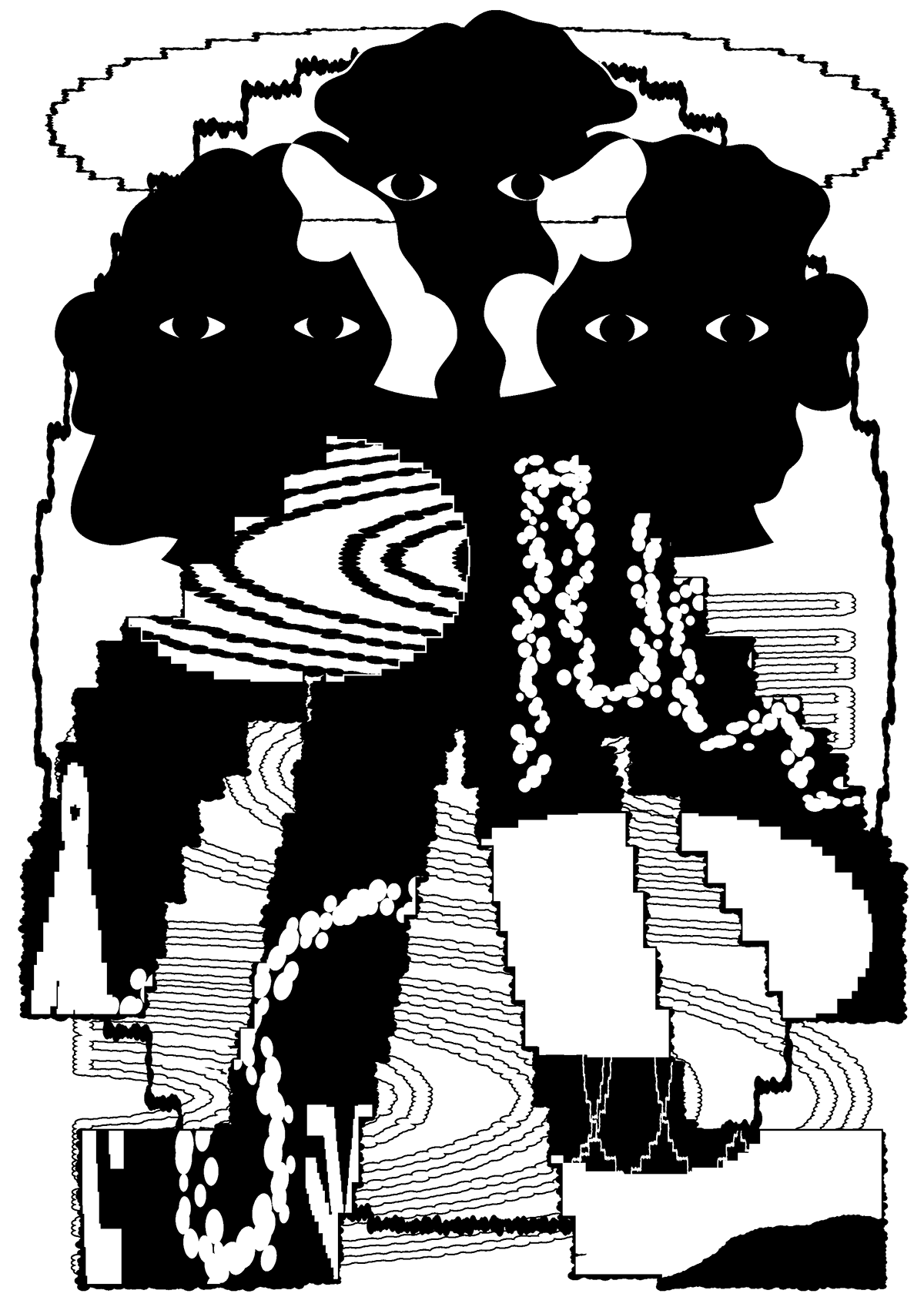
Concept, design, coding: BANK™ @bank_graphic_design_today
Illustration: Célestin Krier @celestin_krier
Typefaces: Oracle by @abcdinamo and Facitype by @ops_type